Operator-Led Advisory vs. Fractional CMOs and CROs.
A fractional CMO or CRO often manages a function. Operator-led advisory fixes the system around the function: ICP, positioning, packaging, sales motion, partner strategy, org design, operating cadence, and board-level commercial narrative.
Both can be the right call. This page lays out when each one is — so you hire for the seat when the seat is the problem, and fix the system when the system is.
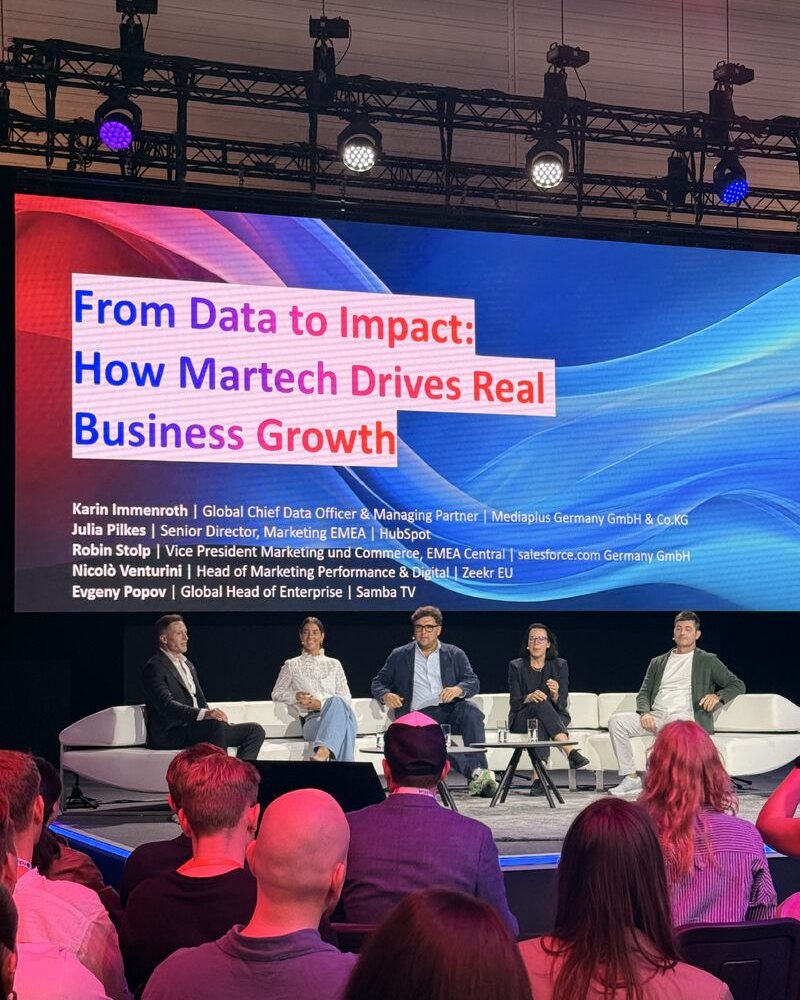 DMEXCO 2026 · CologneTech Stage
 The difference in one sentence.
A fractional executive steps into a seat. Operator-led advisory pressure-tests the commercial system before — or around — the seat.
Both are senior. Both are part-time relative to a permanent hire. The difference is the unit of work: a fractional CMO or CRO runs a function and is accountable for its output. Operator-led advisory is accountable for whether the whole commercial system — the ICP, the story, the packaging, the motion, the partners, the cadence — is actually ready to scale. When the system is sound, the seat compounds it. When it isn't, the seat inherits it.
Two honest answers.
A fractional executive is not a lesser choice, and advisory is not a substitute for leadership. They solve different problems.
- You know the motion — the GTM playbook is proven and just needs someone senior to run it.
- The ICP is clear and the company agrees on who it sells to.
- Sales and marketing ownership is clearly defined; the seat is empty, not the system.
- You need leadership capacity — bandwidth, management, execution horsepower.
- The commercial operating system already works; you are scaling it, not questioning it.
- Founder-led GTM is breaking — deals still route through the founder and it no longer scales.
- Traction is not becoming repeatable pipeline.
- Sales and marketing disagree on what a qualified opportunity looks like.
- The category story is unclear — the market cannot place you, so every deal starts from zero.
- Partnerships exist on paper but produce no pipeline.
- You are entering the US and the home-market motion is not transferring.
- Org design is premature or confused — titles before motion, hires before clarity.
- The board needs a credible commercial plan, not a bigger activity report.
If most of the right-hand column reads true, hiring into the seat now means paying a senior salary to discover the system problems the hard way. If you're crossing borders on top of it, start with the US market entry advisory read — regional inconsistency is usually a system symptom, not a talent gap.
Evgeny is a rare find. Both thinker and doer, Ev has the ability to develop the vision, architect the solution and then see it through to implementation. He navigates the increasingly complex waters of marketing technology in the post-cookie world with confidence and ease.
What operator-led advisory fixes.
Ten layers of the commercial system. A fractional executive typically owns one or two of them; advisory pressure-tests all ten — because a failure in any one of them shows up as "sales isn't working."
-
ICP & segmentation
Who you sell to, who you don't, and the bad-fit segments draining the pipeline.
-
Narrative & category position
The story the market can repeat — and where you sit in the buyer's frame.
-
Packaging & pricing logic
What is actually being sold, in units a buyer can evaluate and a rep can quote.
-
Sales & BD motion
The repeatable path from first conversation to closed revenue.
-
Partner strategy
Which partners produce pipeline, in what sequence — and which are just logos.
-
Commercial operating model
Cadence, ownership, and the feedback loop between sales, product, and CS.
-
Retention & expansion motion
How revenue compounds after the first deal instead of leaking out.
-
Org design
The structure the motion needs — not the org chart a bigger company would have.
-
Leadership hiring sequence
Which senior seat to fill first, with what profile, and what it must inherit.
-
Board narrative
A commercial plan the board can underwrite — focus, sequence, proof, accountability.
Why this matters at Series B.
At Series B the problem is rarely just more activity. It is scaling a motion that is not yet structurally sound. The company has traction — real customers, real revenue, a board that believed the story. The instinct is to add capacity: more reps, more marketing spend, a senior fractional leader to run it all harder.
But if the ICP is fuzzy, the narrative doesn't land without the founder in the room, and sales and marketing disagree on what a good opportunity is, capacity multiplies the confusion. That is why the primary fit for this work is the Series B Scaleup (75–200 employees · $10–30M ARR) — with a secondary fit at Series A PMF (25–75 employees · $2–10M ARR), and selective engagement at Series C / Growth (200–500 · $30–75M ARR) on board-grade decisions. See who it's for for the full fit map.
The advisory is run by an operator, not a consultant: Evgeny Popov — 25+ years scaling AdTech, MarTech, and data businesses across five regions, three exits, AdCP founding member (Signals & Measurement WG), currently Global Head of Enterprise at Samba TV, NYC-based. The proof page carries the track record.
FAQ.
What is operator-led advisory?
Operator-led advisory is hands-on strategic support from someone who has built, scaled, and fixed commercial systems before. It focuses on practical operating decisions, not abstract strategy decks.
How is operator-led advisory different from a fractional CMO?
A fractional CMO typically owns or supports the marketing function. Operator-led advisory looks across marketing, sales, product, partnerships, customer success, positioning, and operating cadence to fix the growth system.
How is operator-led advisory different from a fractional CRO?
A fractional CRO usually focuses on revenue leadership. Operator-led advisory pressure-tests whether the revenue motion, ICP, packaging, team design, partner strategy, and sales narrative are ready to scale.
When should a founder choose operator-led advisory first?
Choose operator-led advisory first when the company has traction but the commercial system is unclear, founder-dependent, regionally inconsistent, or not yet ready for a senior permanent hire.
Is No Fluff Advisory an agency?
No. No Fluff Advisory is not a media agency, creative agency, or outsourced sales agency. It provides operator-led commercial advisory for growth-stage technology companies.
Three ways in.
The work runs through three engagement models — diagnostic first, embedded when execution is the gap, ongoing when the decisions are.
-
Market Entry Audit
A 2–3 week diagnostic. The independent read on ICP, narrative, partners, proof gaps, and the next 90 days — before anyone gets hired.
-
GTM & BD Sprint
6–8 weeks embedded. Fixing the motion in live deals and live pipeline, not on slides.
-
Advisory Retainer
3 / 6 / 12 months of operator partnership through the decisions a fractional seat can't carry alone.
Not sure which
you need?
That's a normal place to be — and a cheap question to answer. A short conversation is enough to tell whether the problem is the seat or the system. Honest answer either way, including "hire the fractional."