AdTech & MarTech GTM Advisory.
Operator-led advisory for growth-stage AdTech and MarTech companies whose product outgrew their go-to-market.
GTM advisory is not sales coaching and not a strategy deck. It is working through the commercial system as one system — GTM architecture, positioning, packaging, pipeline design, partner motion, and the operating model that carries them — until growth stops depending on heroics. The work runs through three engagement shapes: a Market Entry Audit (2–3 weeks), a GTM & BD Sprint (6–8 weeks embedded), and an Advisory Retainer (3 / 6 / 12 months).

- primary fit
- Series B Scaleup (75–200 employees · $10–30M ARR)
- secondary fit
- Series A PMF (25–75 employees · $2–10M ARR)
- selective
- Series C Growth · Enterprise (200–500 employees · $30–75M ARR)
- audit
- Market Entry Audit · 2–3 weeks
- sprint
- GTM & BD Sprint · 6–8 weeks embedded
- retainer
- Advisory Retainer · 3 / 6 / 12 months
Who this is for.
The primary fit is the Series B Scaleup — product traction is real, the commercial system is not. Honest answer either way before anything is scoped.
- Series B Scaleup (75–200 employees · $10–30M ARR) — the primary fit. Product sells, but the commercial system is improvised.
- Series A PMF (25–75 employees · $2–10M ARR) founder-led teams with a specific GTM or packaging problem to solve.
- Series C / Growth (200–500 · $30–75M ARR) — selective, on board-grade decisions: pricing resets, regional GM models, partnership pressure-testing.
- Founder-led sales is carrying the number and everyone knows it can't for much longer.
- The product roadmap moved faster than the packaging — buyers can't tell what they're buying or why now.
- Pipeline exists, but nobody trusts the stages, the forecast, or the reasons deals stall.
Entering the US specifically? That version of the problem has its own page: US market entry for AdTech and MarTech companies.
The patterns that start the conversation.
These are five of the ten named problem patterns this practice is built around — the full set, with the playbooks and engagements each one maps to, lives on the problems page.
- 01
US demand exists, but the motion is unfocused.
Inbound interest, conference conversations, a few logos — and no coherent read on which segment, buyer, or motion to commit to. Everything is being pursued, so nothing compounds.
- 02
Founder-led GTM is starting to break.
The founder is still the best seller in the company, and the bottleneck. Deals stall when the founder isn't in the room. Nothing is documented; nothing transfers.
- 03
Sales and marketing are not one system.
Marketing generates activity, sales works its own list, and the two argue about lead quality instead of operating one pipeline with one definition of a qualified buyer.
- 04
The partner motion is underbuilt.
Agencies, platforms, resellers, and data partners could carry real revenue — but partnerships are handled opportunistically, with no sequencing, packaging, or ownership.
- 05
Activity without repeatability.
The team is busy. Deals close. But nobody can say which motions actually work, so headcount gets added to noise instead of to a repeatable system.
Six layers of one commercial system.
None of these fixes anything on its own. Fixing pipeline stages on top of an unfocused ICP is decoration. The work goes layer by layer, in order.
- 01
GTM architecture
- ICP and segmentation
- Motion selection (direct / partner / product-led)
- Buyer journey design
- Named-account logic
- 02
Positioning and narrative
- Category frame
- Buyer-specific value proposition
- Competitive wedge
- Objection handling
- 03
Packaging and pricing structure
- Use-case packaging
- Product-to-offer translation
- Proof assets by segment
- Enterprise readiness gaps
- 04
Pipeline design
- Stage definitions that mean something
- Qualification logic
- Forecast hygiene
- Reason-code discipline
- 05
Partner and channel motion
- Partner map and sequencing
- Agency / platform / reseller logic
- Data and measurement partners
- Ownership and cadence
- 06
Commercial operating model
- Founder-led to team-led transition
- First-hire profiles and mandates
- Sales / CS / product feedback loop
- 90-day operating cadence
Artifacts a team can operate with.
What ships depends on the engagement — the audit, the sprint, and the retainer produce different depths of each. What never ships is a deck without an owner.
- 01 A sharpened ICP and segment sequence
- 02 Buyer narrative and positioning read
- 03 Packaging and proof-gap assessment
- 04 Pipeline architecture with honest stage definitions
- 05 Partner map and sequencing plan
- 06 First commercial hire profiles and mandates
- 07 A 90-day operating plan with a named owner
- 08 A board-grade read of the commercial state
Advice from someone who has run the number.
GTM advice is cheap when the advisor has never owned the outcome. This practice is led by Evgeny Popov — 25+ years scaling AdTech, MarTech, and data businesses across five regions, three exits, currently Global Head of Enterprise at Samba TV, and a founding member of AdCP (Signals & Measurement working group). Based in NYC.
That matters for one practical reason: an operator has sat on the buying side and the selling side of the exact deals a growth-stage vendor is trying to win, so the advice starts from how those deals actually get done — not from a framework. The longer version of this argument, including how operator-led advisory differs from hiring a fractional executive, is here: operator-led advisory vs. fractional executives.
Evgeny brings great passion and energy, combined with deep Ad/Mar tech expertise. He has demonstrated the ability to provide both strategic guidance and to build teams that deliver data and analytics services for the continually evolving marketing ecosystem.
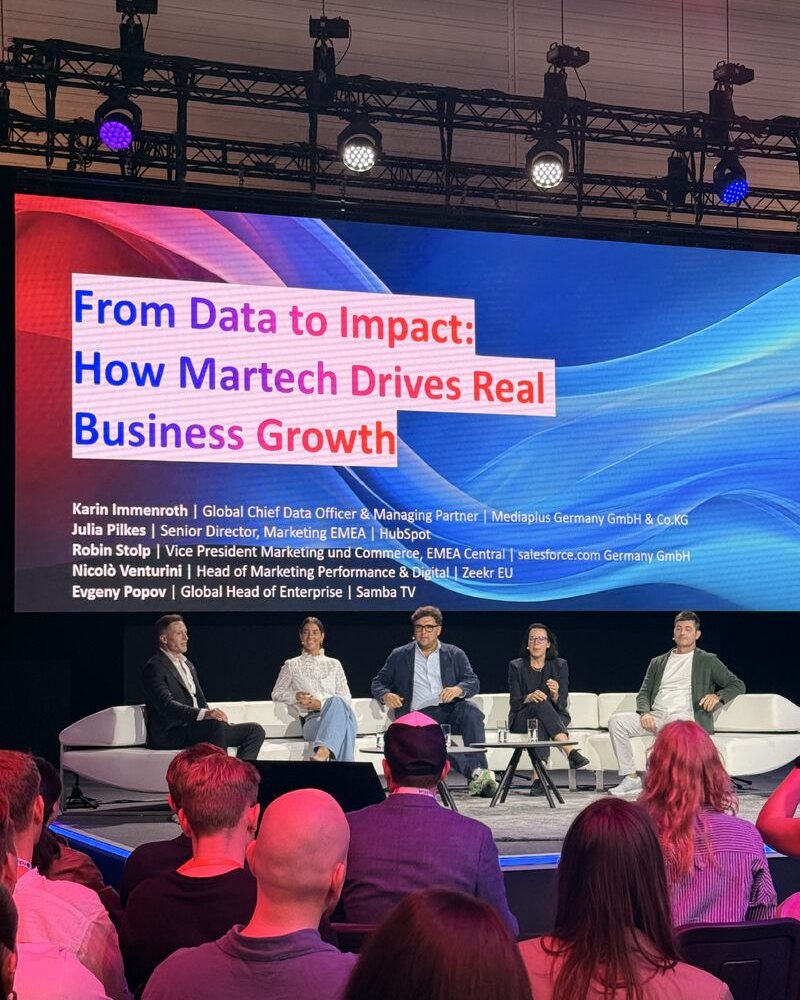 DMEXCO 2026 · CologneTech Stage
 Diagnose. Build. Operate.
Three engagement shapes, in sequence or standalone. Most GTM advisory starts with the audit, because fixing the wrong problem fast is still fixing the wrong problem.
- 01
Market Entry Audit
The diagnostic. Where the GTM actually stands: ICP, narrative, competitive frame, partner map, proof gaps, and a 90-day plan.
See the audit - 02
GTM & BD Sprint
The execution phase. Working inside the team to activate pipeline, partners, and proof against the plan the audit produced.
See the sprint - 03
Advisory Retainer
The operating partnership. Ongoing advisory through the build phase — hiring, packaging, partner, and pipeline decisions as they land.
See the retainer
FAQ.

- Paid Attention · Faris Yakob
What does an AdTech GTM advisor do?
Works on the commercial system as a whole, not one function inside it. That means sharpening the ICP and segment sequence, rebuilding positioning around the buyer instead of the product, fixing packaging and proof gaps, designing pipeline stages that mean something, sequencing the partner motion, and setting the operating cadence — who owns what, reviewed how often. The output is decisions and operating artifacts, not a strategy deck.
When does a MarTech company need GTM advisory?
Usually around Series B, when the symptoms cluster: founder-led sales is carrying the number but breaking, pipeline is noisy and the forecast is not trusted, the packaging no longer matches how buyers evaluate the category, and the first commercial hires are being scoped without a clear mandate. If the product sells but growth depends on the founder being in every deal, the GTM needs to become a system.
How is GTM advisory different from sales consulting?
Sales consulting optimizes one function — scripts, sequences, quota math, tooling. GTM advisory treats sales, marketing, packaging, partners, and customer success as one commercial system, because that is how buyers experience it. A better call script does not fix an unfocused ICP, packaging the buyer cannot evaluate, or a partner motion nobody owns. The architecture has to be right before the tactics compound.
What does No Fluff Advisory help fix?
Ten named problem patterns: US demand exists but the motion is unfocused; founder-led GTM is starting to break; sales and marketing are not one system; the partner motion is underbuilt; proof is not packaged for enterprise buyers; the org cannot carry the strategy; the data product is valuable but not operationalized; the first US or regional hire mandate is unclear; NDR is a CS scoreboard, not a commercial outcome; and the company has activity but not repeatability.
Who is the best-fit client?
Primary fit: Series B Scaleup (75–200 employees · $10–30M ARR). Secondary fit: Series A PMF (25–75 employees · $2–10M ARR) founder-led teams with a specific GTM problem. Selective: Series C / Growth (200–500 · $30–75M ARR) on board-grade decisions. Pre-Series A / pre-PMF teams and late-stage enterprises are generally not a fit — the honest answer either way, before any engagement is scoped.
The GTM should be
a system, not a person.
If the product sells but growth still depends on the founder, start with the 2–3 week Market Entry Audit — a clear read on the ICP, the narrative, the packaging gaps, and the next 90 days.