WritingReading path

Measurement & Currency.

iROAS, MMM, attribution, and the limits of what a browser or a street will let you observe — how advertising decides what counts, and which numbers survive an audit.

18 essays in this path

of 94 published · 2015–2026

Signature figure
An assay balance: 18 coins, one per essay, weighed against the hallmarked standard Debunking cross-device myth Data is the New Currency to power Attribution The Future of Addressability = $100B Attention Isn’t Enough—The Future of Marketing is Relevance From Meridian to NNN: How Transformers Are Redefining Marketing Mix Modeling Part 4: Why Your Campaign Reports Are Already Obsolete The CMO Owns the Action Space The Metric That Was Never About You Fire the Dashboard, Hire the Agent Measurement, on the Browser's Terms AMC Is Free Now — Sort Of: What Amazon's Clean-Room Democratization Actually Changes iROAS Is Not a Number, It's a Negotiation Measurement for Agentic Commerce Business Outcomes Isn't a Number Measurement, on the Street's Terms Nobody Sells an Outcome The Evidence Premium The Layer That Didn't Ship The standard: what survives an audit AUDIT 18 essays the standard
What counts, who says so, and which number survives an audit.

iROAS Is Not a Number, It's a Negotiation

The same campaign, 54 defensible iROAS values, 83% flipping sign on methodology alone. Eight audit questions — and the failure mode each one catches.

The same campaign, the same spend, the same shoppers — profitable under one defensible recipe, money-losing under another.
Evgeny Popov
All essays

More on this path.

17 essays · newest first

2026 · 11 essays

  1. In 2025 the industry agreed it needed a shared layer for exchanging user context between agents, LiveRamp proposed one, donated it to IAB Tech Lab in late 2025, and it was renamed Agentic Audiences by early 2026 and filed under AAMP. Read at the repository rather than the press release, that layer has eleven commits since its creation in October 2025, no releases and no tags, two pull requests still open, a spec still headed Draft v0.1, and a wire format string that still carries the retired name. Its one working integration — the OpenRTB community extension on Segment.ext.aa and the Prebid.js RTD module — shipped inside a four-week window between March 22 and April 14, 2026 and has had nothing added since. Meanwhile the job got done twice somewhere else: AdCP's Trusted Match carries contextual embeddings at serve time against a 50ms provider timeout inside the router's latency budget, and AAMP's in-bidstream runtime ARTF reached v1.0 on July 20, 2026 with gRPC bid mutations under tmax. Neither references the other's embedding vocabulary. The mechanism is not a governance failure, it is a latency budget: an embedding is only worth carrying if it arrives before the auction closes, so every decision about dimensions, quantisation and timeout behaviour is a property of a runtime, and whoever holds the clock ends up holding the vocabulary. A neutral layer donated to a standards body is not the same thing as a layer that ships. The general test, applied here to AdCP as well, is commits, tagged releases and whether the one integration that exists is still maintained — and it closes with a checkable prediction about what would prove Agentic Audiences is maintained rather than parked.
  2. Season 2's sixth poll asked what wins the bid when every seller can claim performance, and 37 ballots put Verifiable outcomes on top with 54%. Lowest price took 21%, Proprietary data 13%, Exclusive supply 10%. The finding isn't the winner, it's the comparison: seven days earlier the same room priced verifying results at 21% when it appeared as a job an intermediary does, and the identical idea took two and a half times the support once it was worded as a property of the offer. Sold as a service, proof polls like overhead. Built into the offer, it wins the bid. The week's term is the Evidence Premium: the price gap between a claim a buyer has to take on faith and the same claim carrying proof the buyer's own side would accept. It is not collected by whoever has the best number, it goes to whoever can produce a number the counterparty accepts without reopening the negotiation, and almost no seller holds that arrangement. The accreditation layer already built this machinery one layer down — research proves a method is valid, accreditation proves a number is transactable — and the MRC's annual audit clock says the premium is a subscription rather than a purchase. Nothing accredits an agent-generated claim yet, which is why the 21% who picked price are reading the next two years correctly. My vote went to Verifiable outcomes, with an interest to declare and a concession about who ends up funding the check.

  3. Season 2's third poll asked what autonomous buying agents will ultimately buy, and 73 ballots produced the clearest majority of the season: Outcomes at 57%, with Impressions at 27%, Audiences at 8%, Attention at 6%. The room voted for the one unit on the list that nobody can currently sell, because selling an outcome means warranting it, and warranting it means pricing the failure case. That pricing function — Outcome Underwriting — is the institution the whole result quietly depends on: a definition both sides accept, a measurement both sides trust, a settlement window, and someone who pays when the outcome doesn't happen. The first three are measurement work. The fourth is capital. Outcome optimization exists inside the walled gardens; outcome insurance does not. Owned loops reprice faster and sometimes carry action-level variance, but no scaled platform guarantees the advertiser's business result. My vote went to Outcomes anyway — for where the market ends, not for what's tradable now — and the 27% who voted Impressions weren't nostalgic; they named the only unit with a working settlement stack, which is why it gets demoted to the receipt rather than killed.

  4. This site's ask box declined a question on how to measure DOOH and place-based media eight times, in what turned out to be its own test runs. The answer: a DOOH number is one near-observed event, one auditable claim, and three models stacked on top — a chain the channel has been honest about since 1933. Run the Instrumentation Test in reverse and the punchline lands: the channel everyone calls unmeasurable is the one where reach and frequency still mean something.

  5. Friday's poll asked what agents will optimize for, and 54% of 51 ballots said Business Outcomes — more than Lowest Cost and Highest ROAS combined. This essay's answer to why: Business Outcomes was never a fourth number competing with the other three. Lowest Cost, Highest ROAS, and User Satisfaction are each a single scalar an optimizer can directly maximize — and a single scalar is exactly what gets gamed. Business Outcomes can't be scalarized the same way, which is the point: the room didn't vote for a better objective function. It voted against handing the agent one at all.

  6. Amazon opened AMC to all sponsored-ads advertisers in Sept 2025. What's free, what still costs, what the 100-user threshold hides, and what expires Dec 2026.

  7. The agent doesn't click, doesn't see ads, and buys anyway. A breaks/survives/emerges triage of commerce measurement, and the instrumentation to build now.

  8. The W3C Attribution API debate, read as a constitutional question. Mozilla's Martin Thomson says the quiet part precisely: the test of any privacy technology is not the information flows — it is who decides. The browser is bidding to become the counterparty that grants measurement its standing, and every operator concern in the spec follows from that one move.

  9. A complete build recipe: GA4, Search Console, Claude, and GitHub wired into an editorial agent that reads a month of data, writes five ranked recommendations, grades its own previous advice, and pings you — on two cadences, for pennies. Five APIs, zero dashboards, one afternoon.

  10. Friday's poll asked which marketing metric breaks first once agents become the primary buyers. This essay's answer is Attention, and for a mechanical reason: it was never a measurement of the market — it was an inference about something no one could directly observe. Reach & Frequency and Attribution make the same category error one layer removed. ROAS survives by accident, not merit. And the record that replaces all three isn't a better guess — it's the first time anyone could just read the answer instead of inferring it.

  11. Measurement stops explaining the past and starts issuing permissions. The post-agentic CMO's deliverable is not a channel plan — it is guardrail architecture. Here is the ownership split, the operating loop that already works, and the ten-question procurement test.

2025 · 3 essays

  1. From post-mortem PowerPoints to continuous learning systems. The 90-day learning lag is killing performance — and attribution theater has us making million-dollar calls on correlation dressed up as causation. Here's what changes when learning happens in milliseconds, not months.

  2. Google's NNN brings Transformer self-attention to Marketing Mix Modeling — moving past Meridian's parametric assumptions to learn temporal dependencies, cross-channel synergies, and creative nuance directly from aggregated data. ~22% lift in predictive accuracy on early benchmarks.

  3. Introducing the EARO framework — Exposure, Attention, Relevance, Outcome — with 22 metrics across four dimensions.

2022 · 1 essay

  1. When hundreds of LinkedIn job titles carry the word, it is time to define it. Addressability is the capacity for an entity to be targeted and found: the $100B+ of post-cookie open-web spend that depends on it, the three-letter acronyms that run it, and the four addressability paths and which ones survive 2023.

2015 · 2 essays

  1. Why the DMP is the foundation for multi-touch attribution and the connective tissue across marketing channels.

  2. Deterministic vs probabilistic matching. The eight questions to ask every cross-device vendor before signing.

Also on this path

Not an essay — but it belongs here.

3 research papers · 1 playbook · 1 appearance

Primary research

From writing to engagements.

applied-work/measurement-currency 1 operating playbook
Operating playbook
Measurement Governance Governing what counts inside the company — metric definitions, change control, restatement policy, the evaluation stack, and the board-grade number that survives a finance review.

On stage

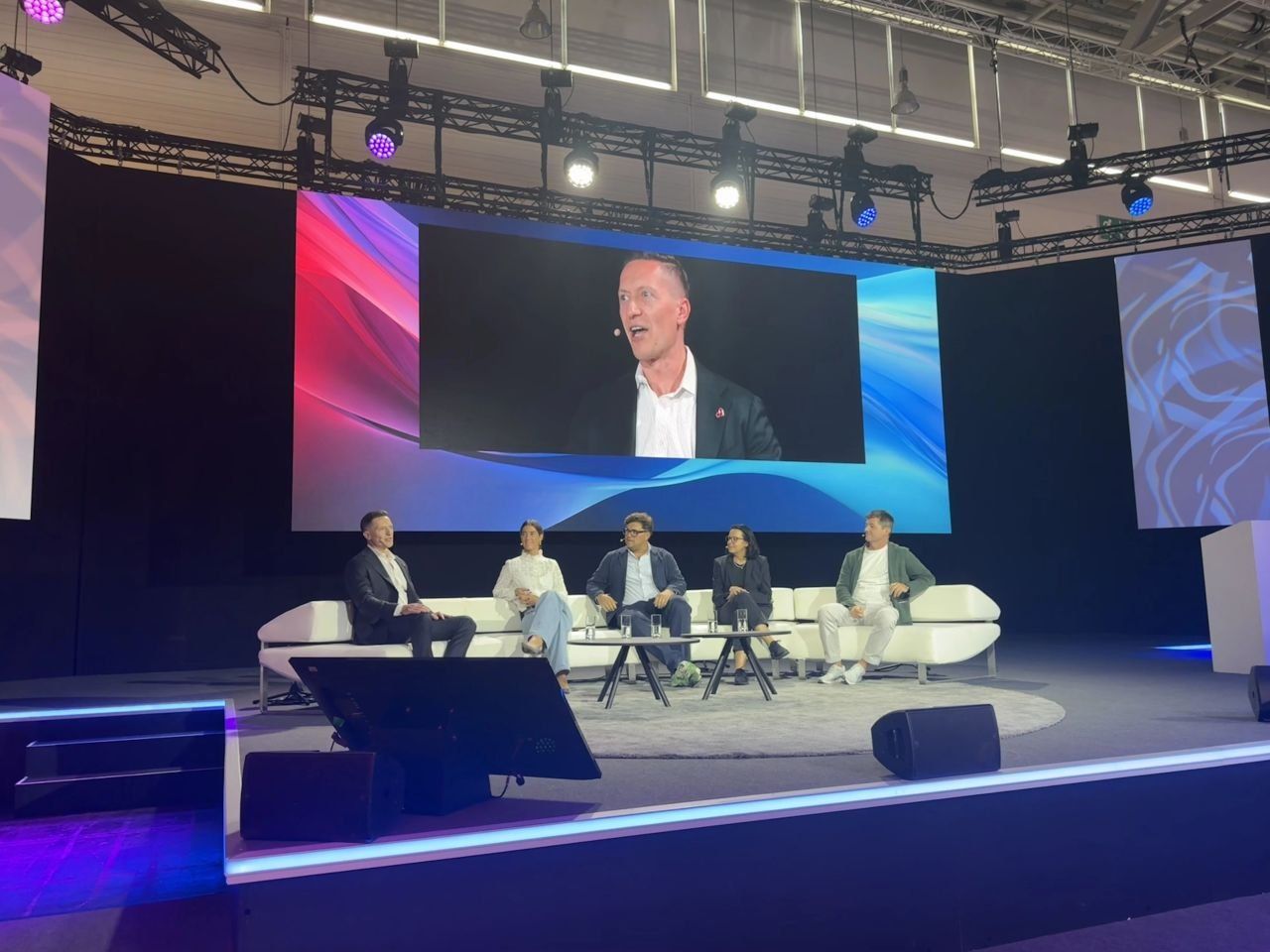
From Data to Impact: How Martech Drives Real Business Growth

Watch the panel